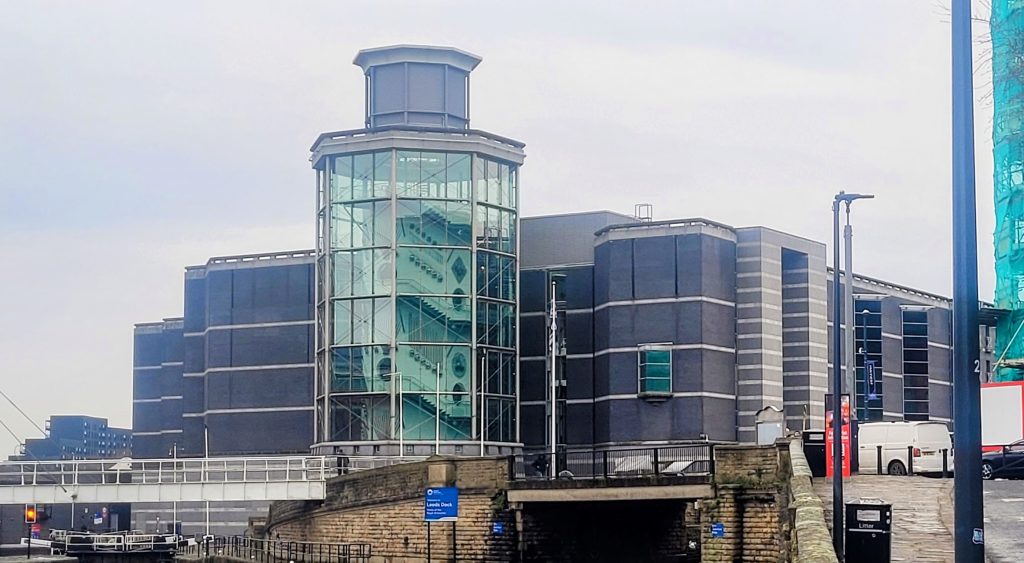
The reason I prefer to study and explore modern history is because I always feel I can relate more to those who came only a few generations before me. The Battle of Agincourt exhibit at The Royal Armouries in Leeds challenged this thought process of mine, and brought the lives of Earls, Knights and Peasants into the limelight in such a way that I felt I had to write about it!
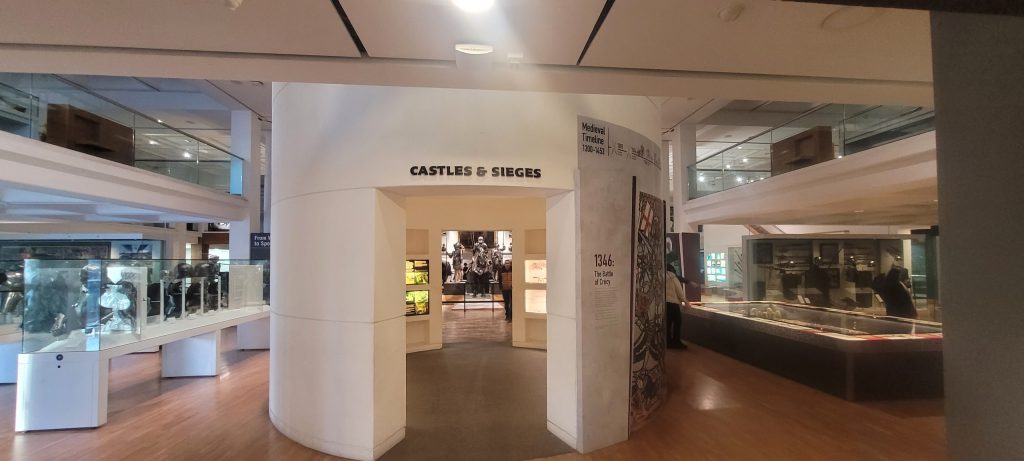
The entrance is not eye catching or particularly special. Many people might be inclined to walk straight past it and instead explore the area focussed on Siege Machines.
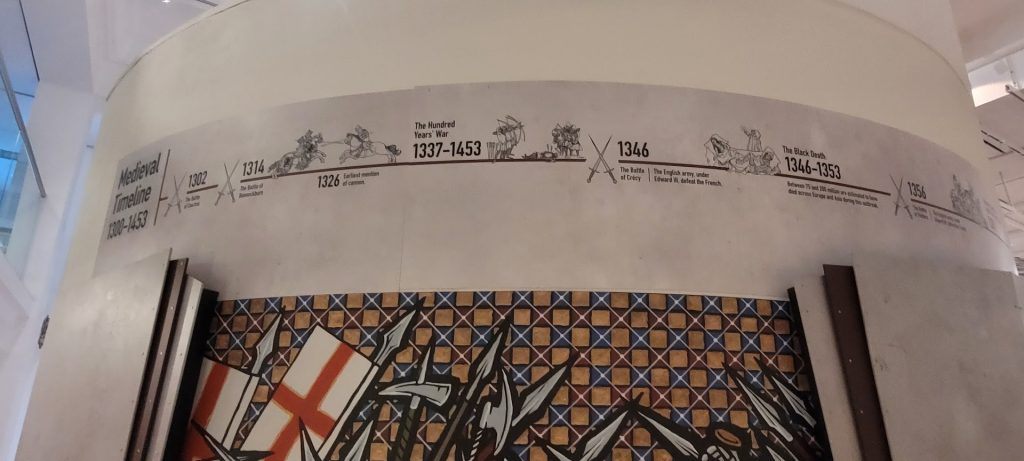
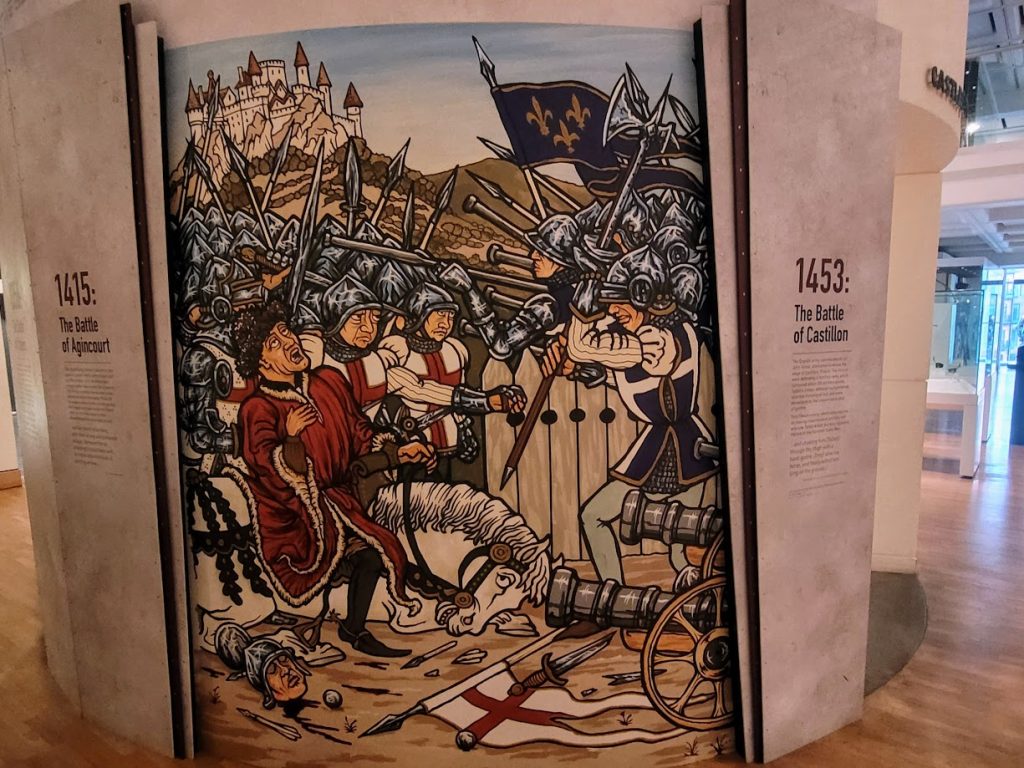
Those that choose to step back into 1415 will firstly be greeted by timeline of the Medieval period from 1300-1453. This is a very brief introduction to the major events of the time period which is nicely supplemented by more detailed descriptions of specific battles throughout the period. This helps situate the visitor within the time period and introduce them to the Battle of Agincourt, the most famous event of the 100 years war.
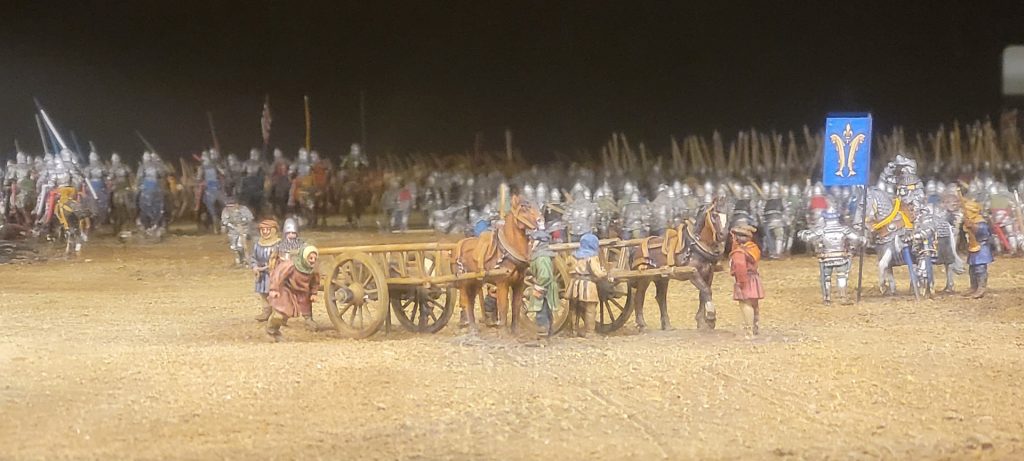
The model of the Battle of Agincourt is my personal favourite aspect of this exhibit, and is easily the most eye catching part of it. Each minute detail on the different figures is amazing to look at. The interactivity that the museum has achieved from a glass panel covered model is astounding.
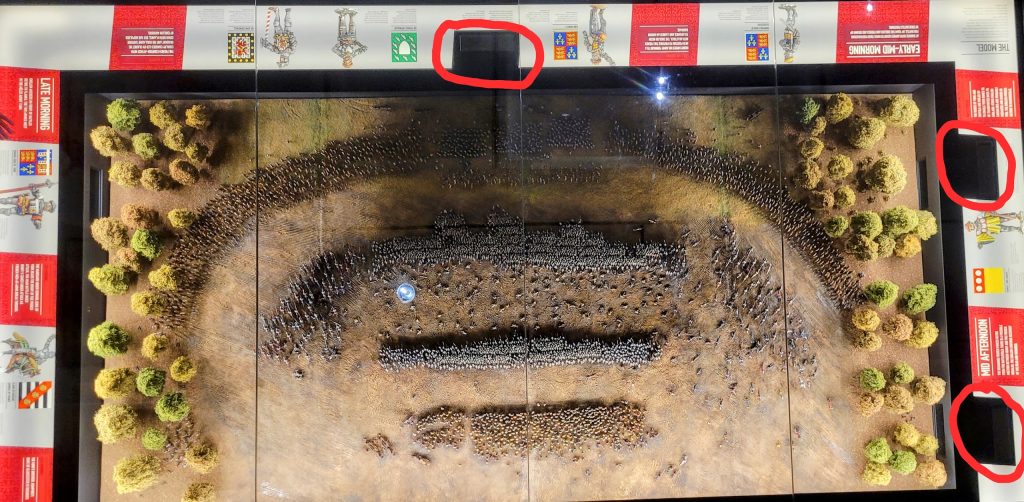
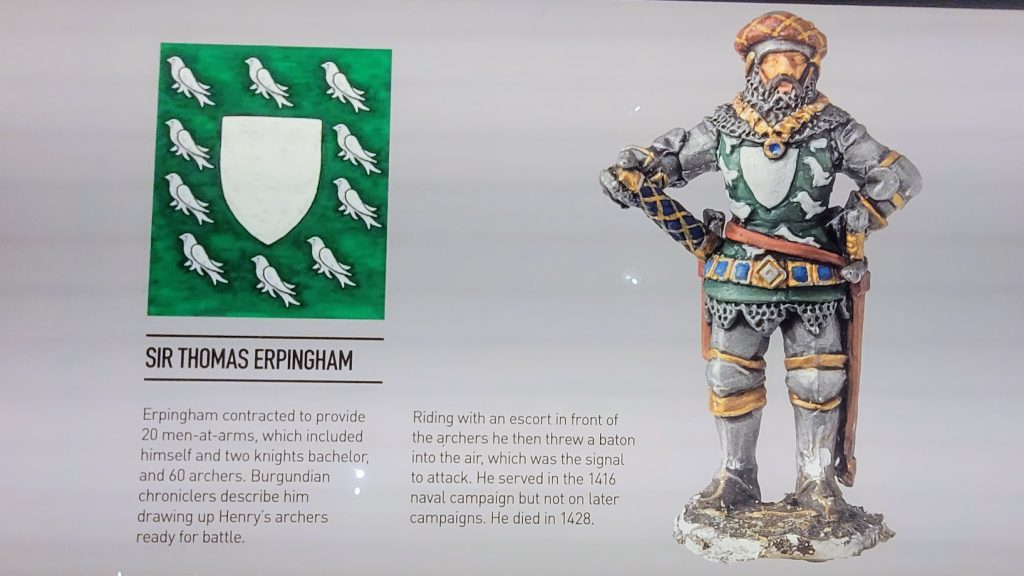
Firstly, the outside of the display case features descriptions of key players in the battle on both the English and French sides of the battle. Alongside these descriptions are their unique coat of arms, and most ingeniously, a picture of the figure that represents them in the accompanying model.
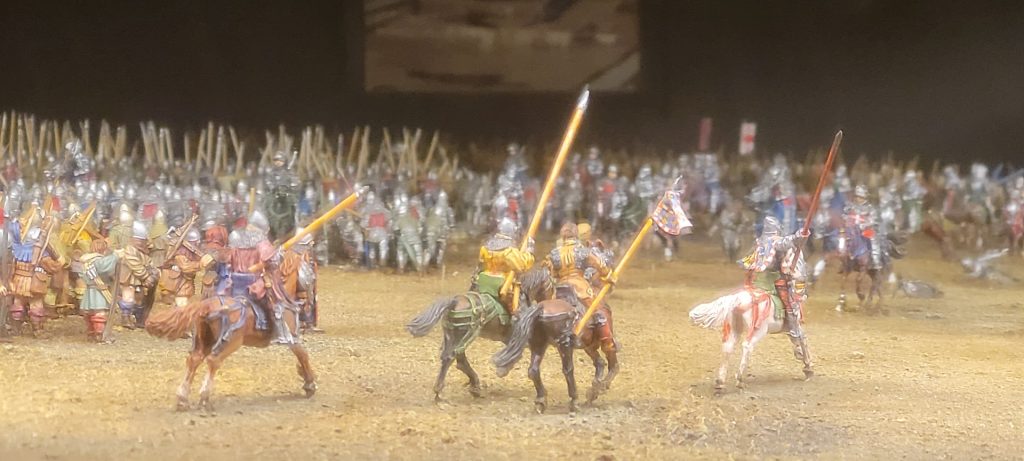
The display case also features enhancement windows that you can look through to get a close-up view of the battle, here you can see in vivid detail different aspects to the battle, from Longbowmen to mounted cavalry and from a King to a lowly battlefield looter. With a bit of imagination you can really feel as though you were there watching the battle unfold.
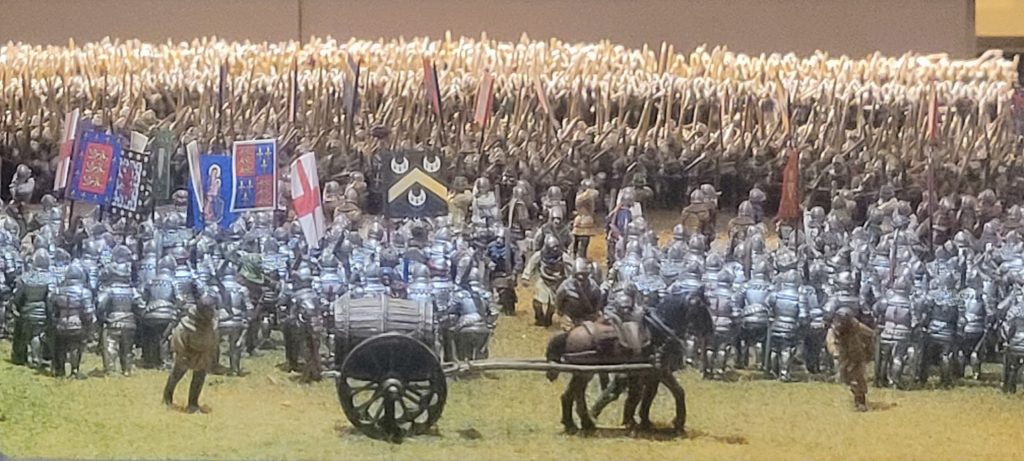
The model helps the visitor to understand how a numerical advantage does not always mean assured victory. The position of each individual model helps build the bigger picture of why the English won the Battle of Agincourt, and to top this exhibition off there is still more to come.
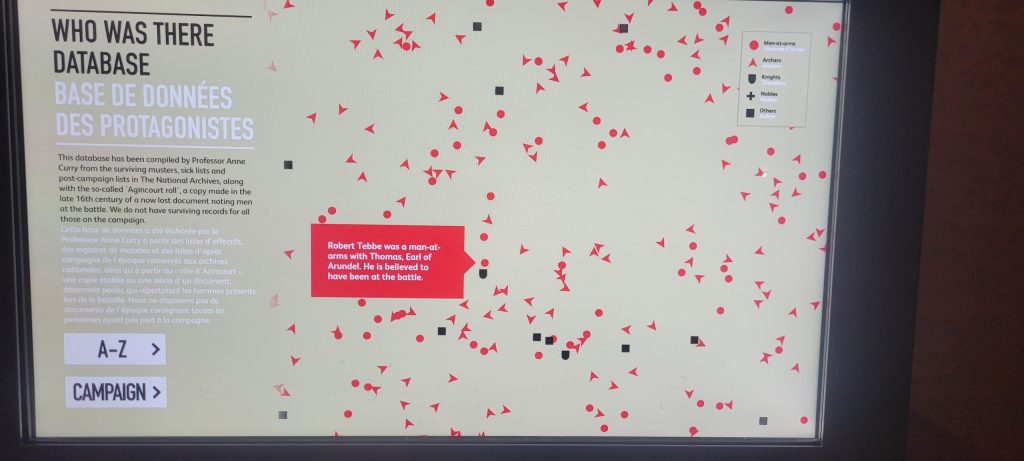
I was very surprised to see a touchscreen monitor in this exhibit and when I saw that it contained details of those that fought in the battle of Agincourt I was very impressed. The monitor lets the visitor create a real human link to the model. You can link the names and roles of those seen on the monitor to the thousands of soldiers represented in the model. Visitors who spend a few more minutes exploring the exhibit and come across the monitor will be rewarded as the models they have previously seen become far more human when put alongside the real stories and lives of those that fought at Agincourt.
The final aspect of the exhibition is a video which features a historical re-enactment from the build up to the aftermath of the Battle of Agincourt. It is not too long and is a nice supplementary piece of media added on to the exhibit. The main issue with this video is simply finding it as it seems to be hidden away in a back alley of the larger museum gallery, it would be very easy to miss it. This leads me to believe that the museum place the least amount of emphasis on the video as compared to the rest of the exhibit, which is understandable, but a shame considering the effort and detail that has clearly been put into it.
Final Thoughts
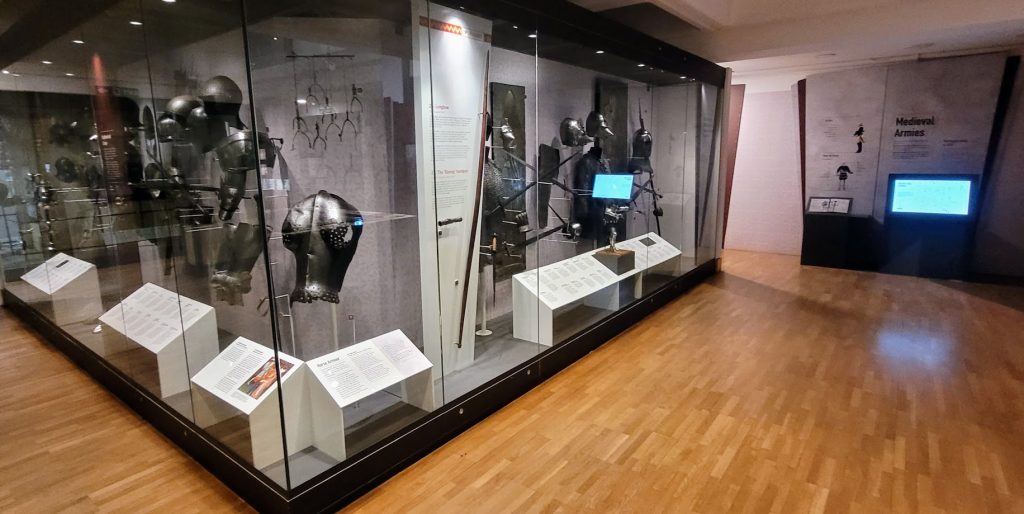
The interpretation within the exhibit is brilliantly done, no single piece of interpretation goes amiss, and every piece only adds further detail to the story presented by the museum of the Battle of Agincourt. The only issue I have with it is how the displays are spaced out, it would be quite easy for someone to initially miss the exhibit altogether and once they have found it, they could easily overlook the touchscreen display and the video. Fortunately, this does not stop the visitor from understanding the idea behind the exhibit, and they can still understand just how the English came out on top at Agincourt. With all this noted, the visitor would never be able to overlook the impressive collection of arms and armour that the Royal Armouries have placed just a few steps away from the exhibit.
With all this noted I believe the Battle of Agincourt exhibit at the Royal Armouries Leeds deserves a very good rating of 7 out of 10! I would highly recommend anyone visit this exhibit even if they are like me they and are not necessarily interested in the medieval period.






Leave a Reply to Jennifer Chan Cancel reply