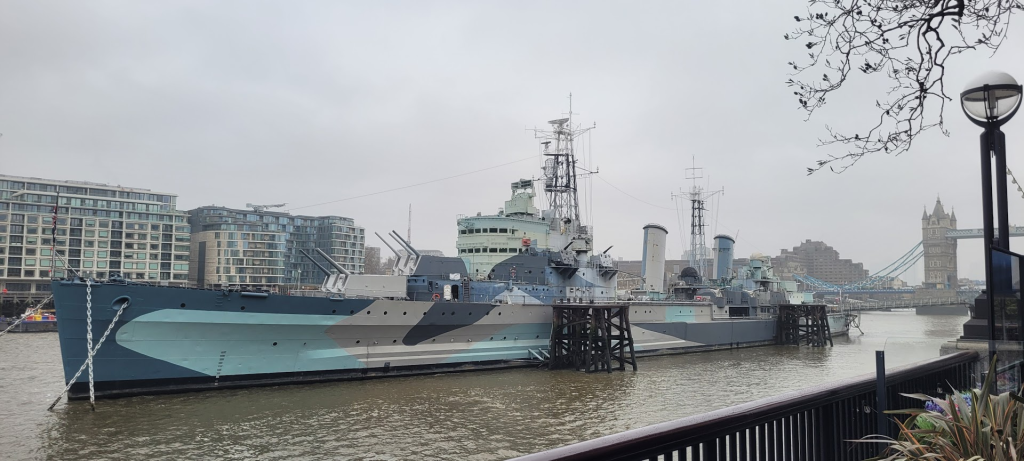
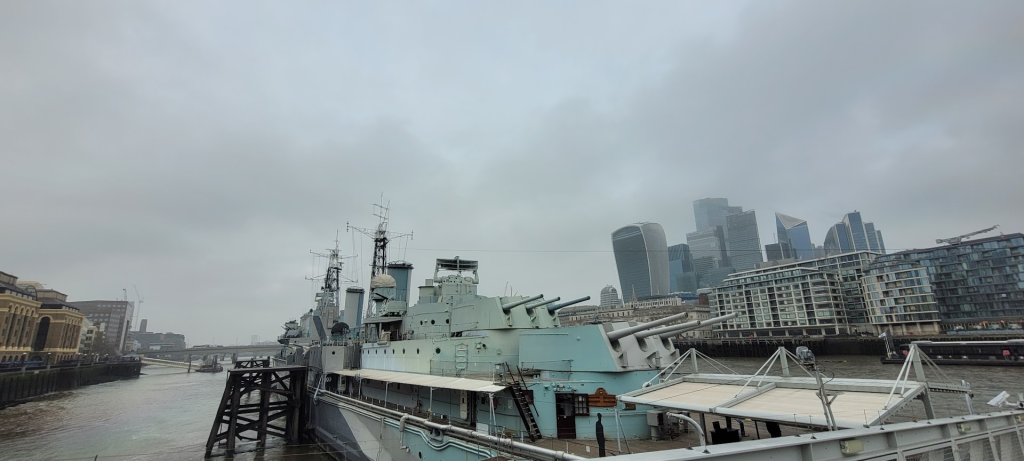
There is a distinct advantage that HMS Belfast has over other traditional museums. Every step you take through the Belfast is a step through history, as the entire building is in itself the exhibition. Traditional museums (for the most part) have to recreate settings or use great displays and interpretation to immerse their visitors. With that being said, the Imperial War Museum knows that it cannot entertain purely on its status as a legendary wartime vessel, and so they have employed a number of great interpretive and display techniques on board this floating museum to make sure that the visitors get the most out of their stay.
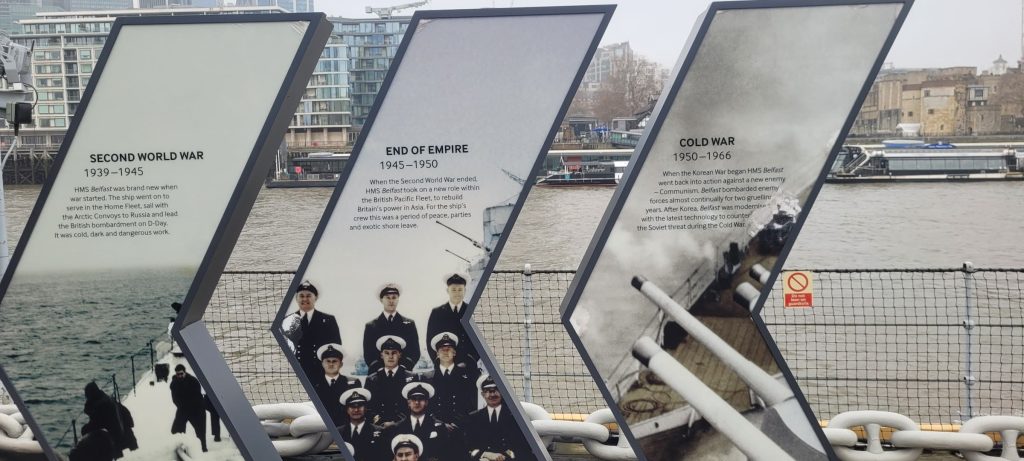
Due to the nature of the Belfast, thereis not much written interpretation on the ship. Instead, you are given the option for an audio-tour of the ship, with a set of headphones and an accompanying tablet provided by the museum. This is a great way of mitigating the lack of written interpretation, and it also allows for additional ways to immerse visitors in ways which written words cannot. For example, there are several parts of the audio-tour that have first-hand testimonies of soldiers in them, be it from the soldiers themselves or actors playing them.
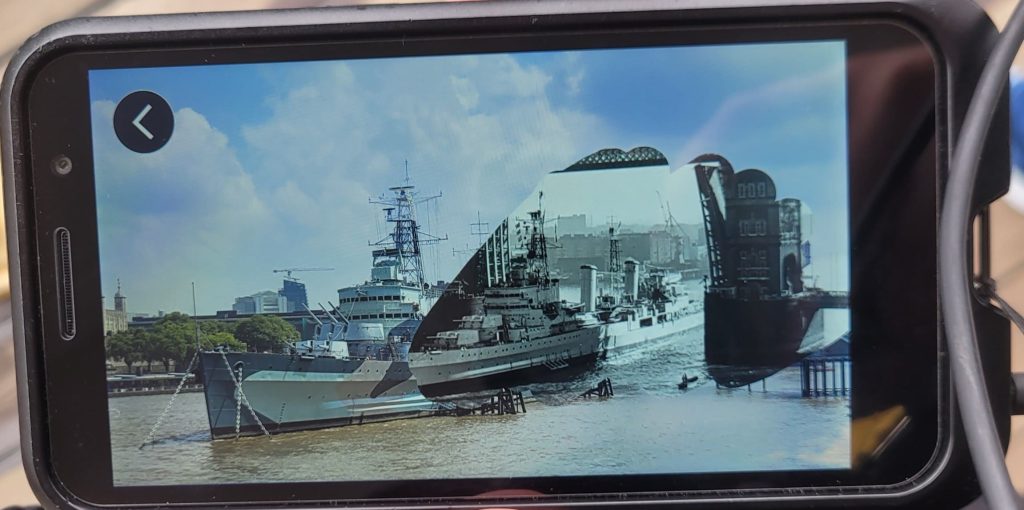
The tour itself is entirely up to the visitors’ discretion; you are allowed to choose what and when to listen to it. Of course, there are suggestions of what you should listen to, and because the route that you walk through is mostly linear, you are best off listening to the audio that corresponds to the section of the ship you are in.
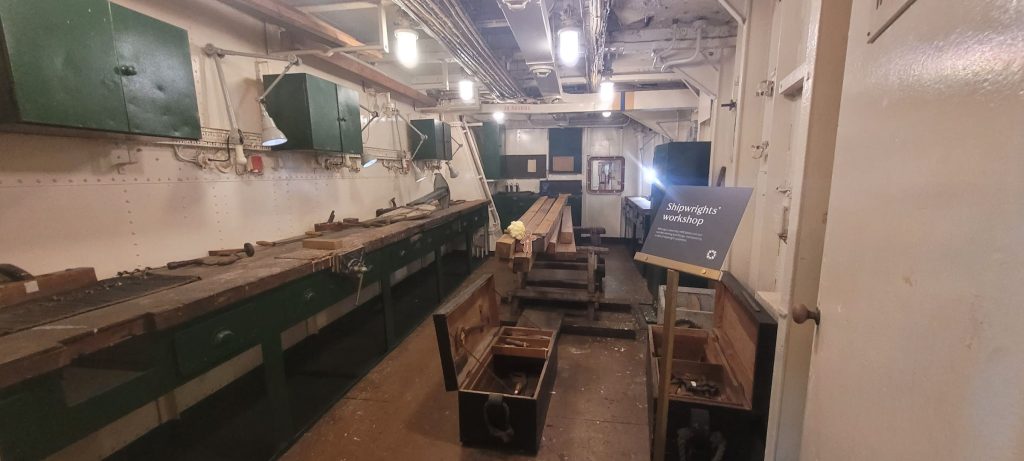
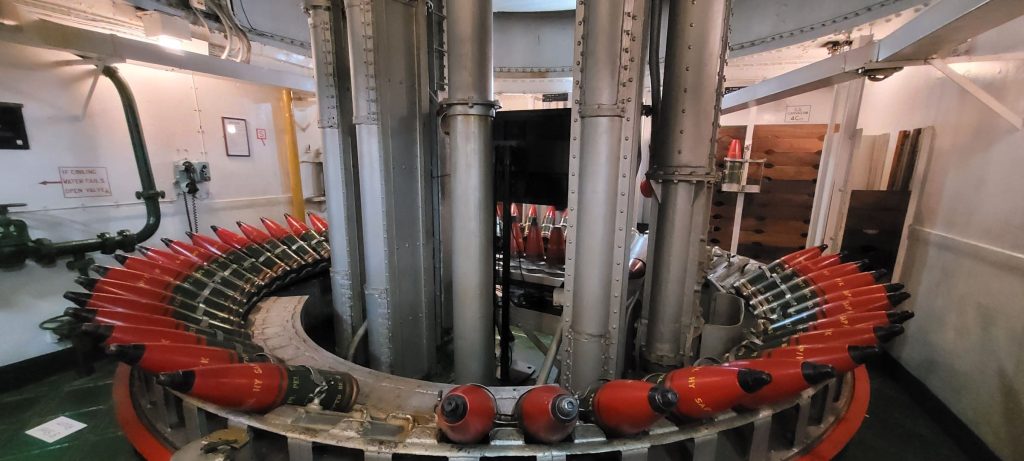
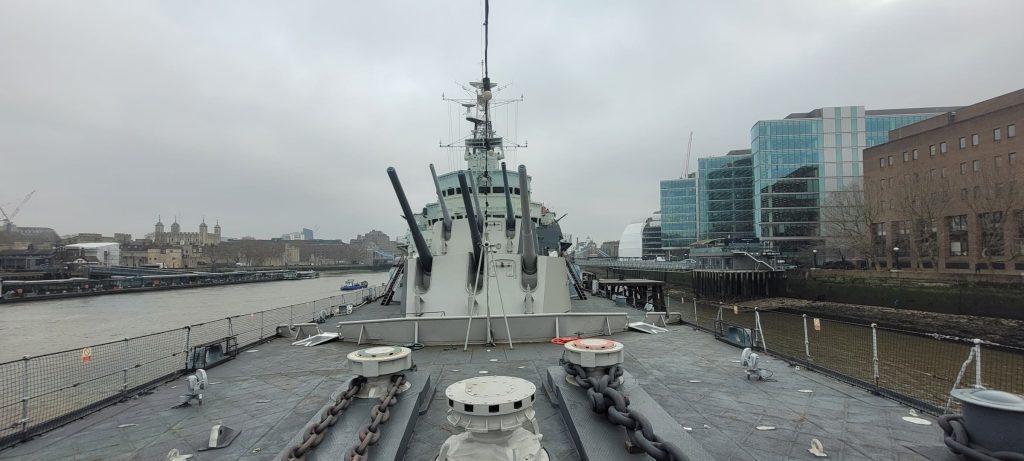
Similar to Sewerby Hall and other historic houses, the aim of the displays on the ship are to help immerse you in the ship’s history, to allow you to make your own conclusions about the sheer scale of operating a warship, as well as everyday life and work on the ship. This technique is used throughout the Belfast, where places such as the food store contain fake hanging pieces of meat and the guns contain shells. Small details like these allow visitors to see the scale of the operations; for instance, the size of the shells that people would have to handle and the amount of food required to keep the ship’s crew running.
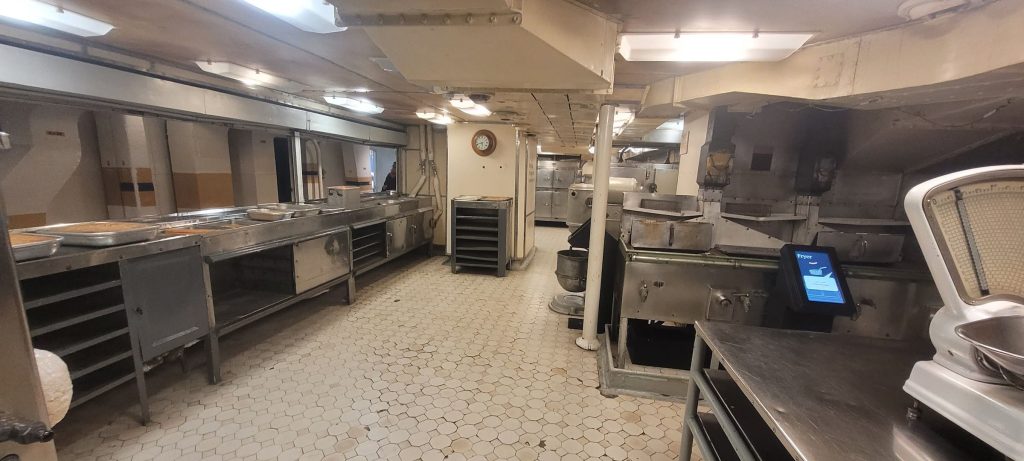
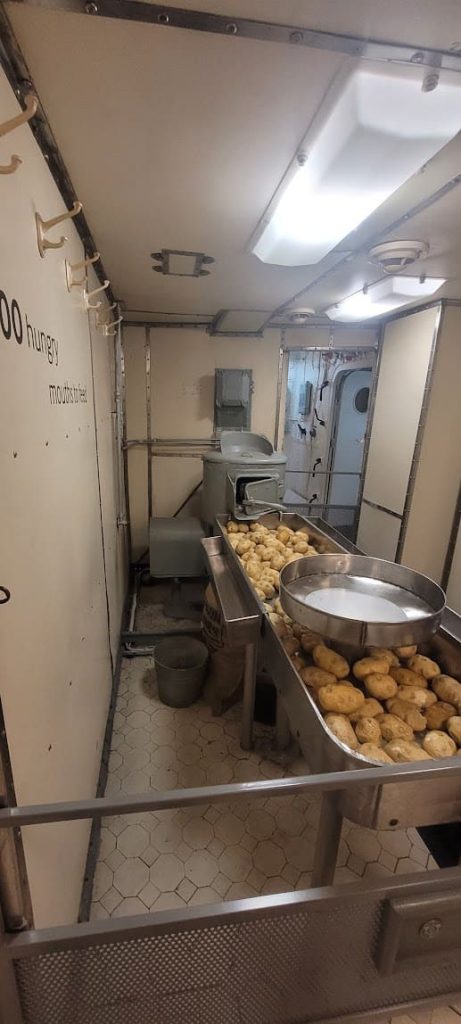
My personal favourite room was the kitchen that had massive vats of potatoes and stews, to just show the sheer amount of food required per day to keep everyone fed. In this room are also digital panels that are designed for children but are still enjoyable nonetheless, that teach you the importance of the cooks’ jobs on the Belfast, and they do provide additional information that even adults can find interesting.
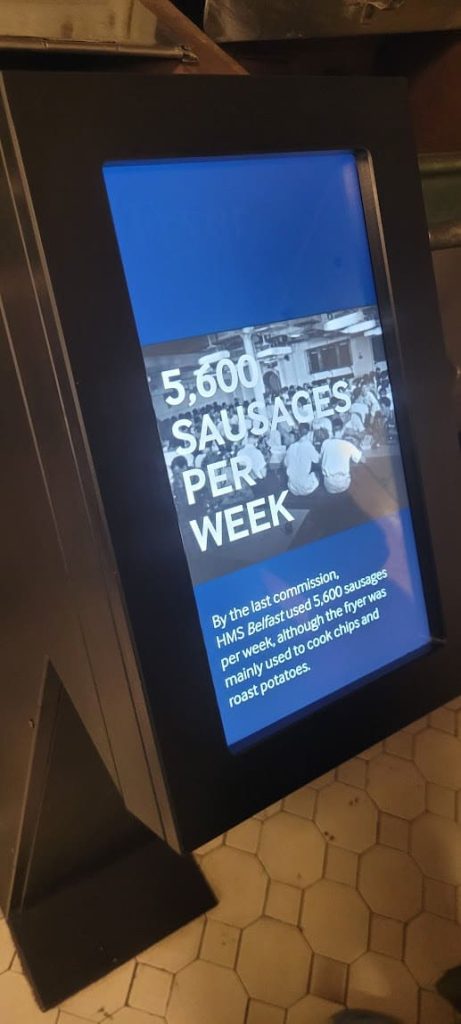
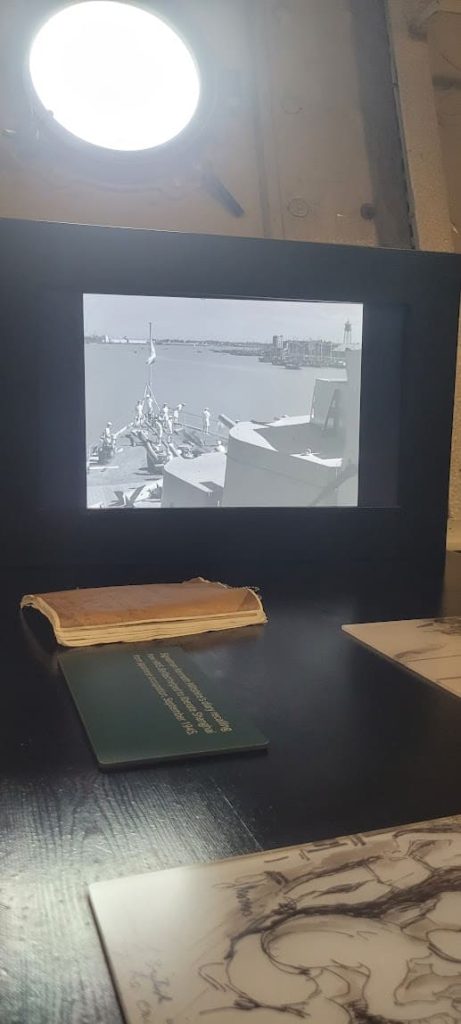
There are several examples of screens showing videos of the Belfast throughout the ship. My personal favourite was a screen that plays a short informative film every few minutes about the Belfast’s mission as a protector of an Arctic convoy during the Second World War. The old videos, paired with the stories behind them, add another layer that helps the visitor understand the treacherous conditions that the sailors faced.
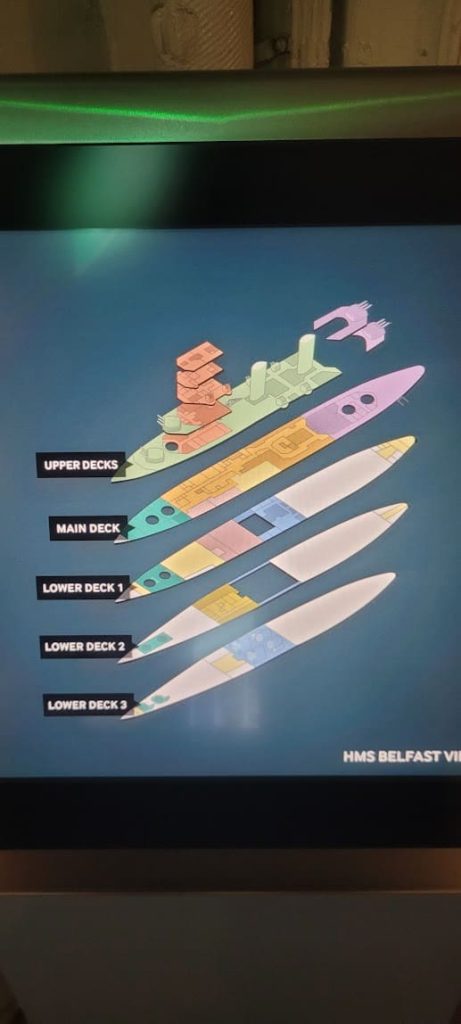
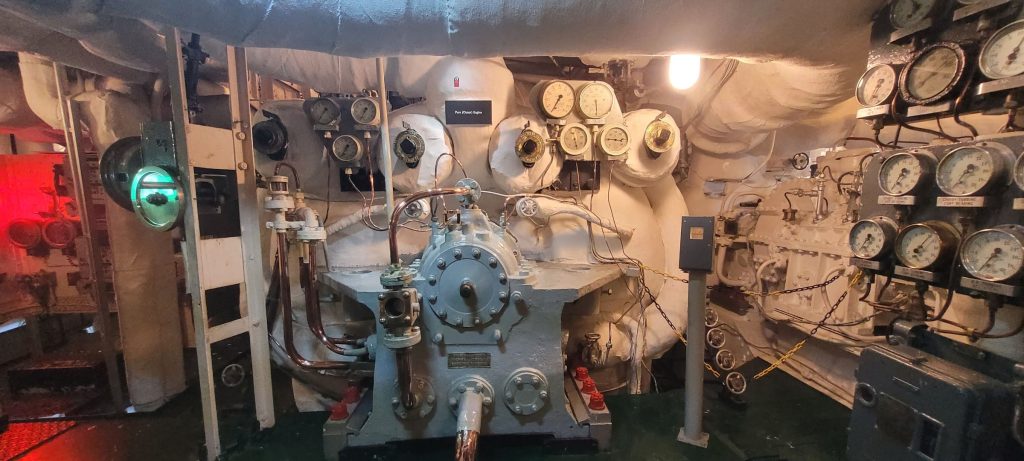
Because the experience has been kept authentic, HMS Belfast is incredibly hard to navigate. Whilst arrows direct you through the ship, you cannot escape having to constantly climb up and down steep ladders, as the crew of the ship did. The engine and boiler rooms, which are below water level, are the prime example of this. You are given relative freedom to walk around these narrow and tight areas, which, whilst hard, provides all the information you need as a visitor about the conditions the crew faced. Paired with the audio-tour, you get a great sense of the claustrophobia and intense nature of working on a warship, particularly in wartime.
Overall, visiting HMS Belfast is an incredible experience. The lack of written interpretation does not hinder the experience, as the entire ship is a display. The audio-tour has a lot to offer, and the digital interpretation that is occasionally seen on the ship only benefits the visitor experience. I even joined a 30-minute talk from a volunteer on the rum ration, a more general part of the Royal Navy’s history, which I found incredibly interesting. I highly recommend visiting the Imperial War Museum HMS Belfast even if you aren’t necessarily a fan of warships. The sheer awe and scale of standing underneath the guns is an experience in itself.
Score breakdown (IWM HMS Belfast): 7.3
Location 1/1
Museums in the centre of London always have to get full marks.
Accessibility 1/2.5
The museum does not have good disability access, and the addition that the audio-tour is required to get the full museum experience does not help this score. The experience is good for children, as they would easily be able to manage with the audio-tour, as well as the additional screens and videos on display throughout the museum. Additionally, they would find it much easier to navigate the tight corridors than adults. Unfortunately, the museum is quite expensive to visit at £26 for an adult.
Presentation 0.5/0.5
This would score maximum marks even it were out of 100.
Displays 3.5/3.5
Because HMS Belfast is the main display, it has to be awarded full points. The opportunities that the IWM had to add to the experience were taken in stride when they attempted to recreate the sights and sometimes sounds of different sections and rooms on the ship.
Interpretation 4.5/7
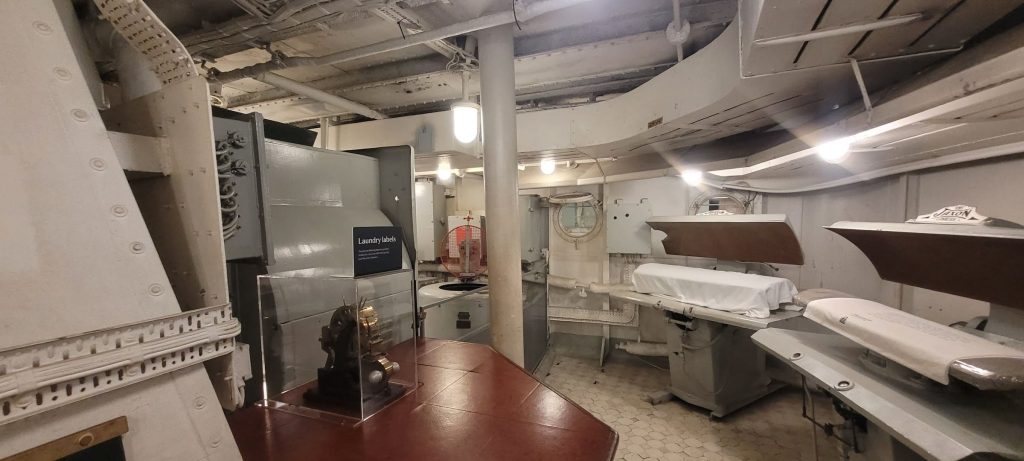
This is perhaps the hardest bit to score here, as the ship itself tells the story along with the additional displays. The audio-tour is good and adds a lot to the experience; however, I sometimes wished it was more clear which parts of the audio you were supposed to listen to and when. You of course know to listen to the boiler room section in the boiler room, but because these sections are split into sometimes six different audio clips, it is difficult to play them at the time when you want to link a physical part of the ship to the story they are trying to tell. There are some good pieces of written interpretation, like the story of the civilians from Hong Kong operating the laundry room, and sometimes I wish these more personal stories were expanded upon.
Amenities 0.5/0.5
“I love a little shop”


Leave a Reply