This is an article solely dedicated to the reasoning behind why and how I review as I do.
The first thing to note is why I do these reviews. I am primarily doing it for my own benefit and own records. I am a History buff first and foremost but throughout my time as an undergraduate student studying History, I became disillusioned with academia and thought that it gate kept a subject that is supposed to be enjoyed by all. Naturally being disillusioned with academia I decided to return to it and complete a postgraduate degree. This time however, it was in Museum Studies. I chose a Museum Studies degree for two reasons, I wish to make a career out of the heritage sector, and secondly because I believe museums and heritage sites are the best vehicles for spreading a legible history to the public. Whilst these reviews are not academic, doing them helps me to think critically about the heritage sector, and it also helps me to stay sharp with my writing, especially because of my aim to keep the reviews between 500 and 750 words.
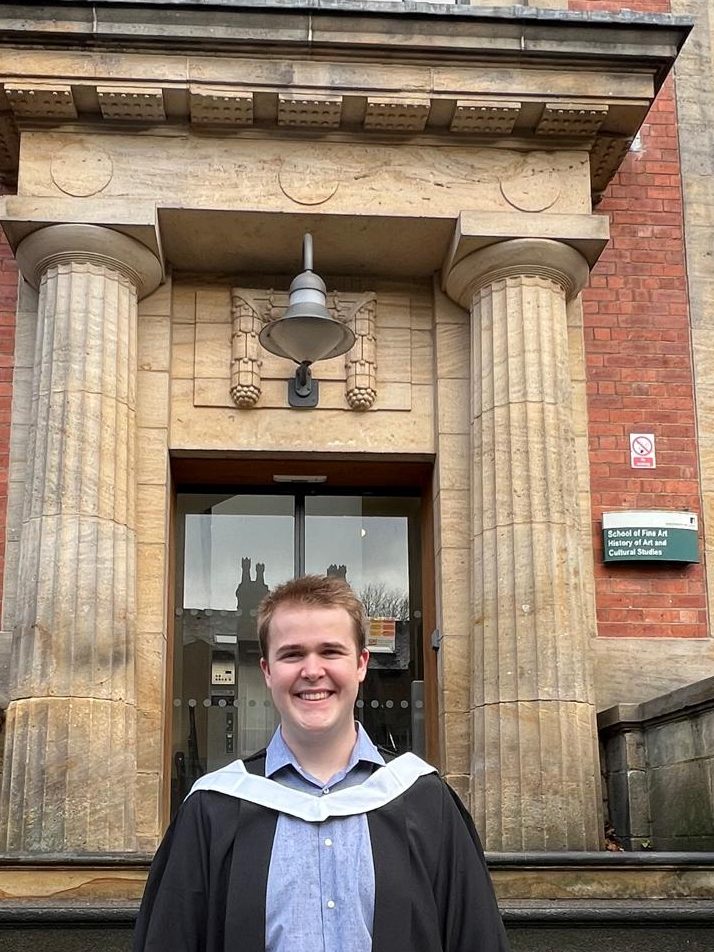
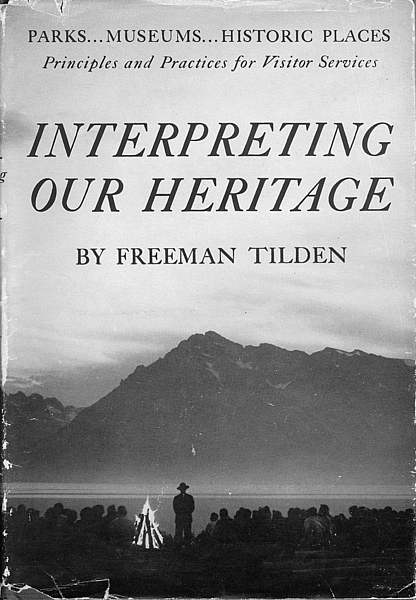
One of the inspirations behind these reviews is Tilden Freeman, the father of heritage interpretation. In his book ‘Interpreting our Heritage’ he outlined 6 principles that all good heritage interpretation should follow and I have emboldened the principles I find most important for my own reviews:
1. Any interpretation that does not somehow relate to what is being displayed or described to something within the personality or experience of the visitor will be sterile.
2. Information, as such, is not interpretation. Interpretation is revelation based upon information. But they are entirely different things. However, all interpretation includes information.
3. Interpretation is an art, which combines many arts, whether the materials presented are scientific, historical, or architectural. Any art is in some degree teachable.
4. The chief aim of interpretation is not instruction, but provocation.
5. Interpretation should aim to present a whole rather than a part and must address itself to the whole man rather than any phase.
6. Interpretation addressed to children (say, up to the age of twelve ) should not be a dilution of the presentations to adults but should follow a fundamentally different approach. To be at its best it will require a separate program1
These principles are incredibly important in modern museum studies and they are also the formative principles behind my own reviews. There are of course other factors I weigh in and other academics ideas I have been influenced by in determining what I found valuable in museum exhibitions, however, analysing them all would take far too long for this article, perhaps if there is demand for it, I will make a brief return to academia to discuss these people and their ideas.
The rating system behind my reviews
When reviewing museums as a whole, I have a total of 15 points to assign them. The more points they receive, the better a museum they are in my opinion. Each factor can be split into decimals. This is done in order to distinguish finer details such as a museum that might take 30 minutes walk from a railway station compared to one that takes 2 minutes. The factors that make up these points are as follows:
- Location (1.5 point)
- Accessibility (3 points)
- Presentation (1 point)
- Displays (3 points)
- Interpretation (6 points)
- Amenities (0.5 points)
Location
This refers to how easy it is to physically get to the museum. The British Museum and most other central London museums would be awarded full points due to their ease of access and close location to many public transport stops. On the other hand, National Trust properties and other such converted country houses would find it much harder to receive points due to largely only being accessible through extended car journeys.
Accessibility
This specifically refers to the accessibility in the museum rather than of the museum. This refers to how easy it is for disabled visitors to navigate the museum. This makes up 1.5 points of the three points available, the rest of the points are distributed depending mon how accessible the museum is for all age groups. For instance a museum with a large focus on children will lose points compared to a museum that has facilities for all age groups to enjoy. With that being said, a larger emphasis is placed on children and a museum will lose more points for having nothing suitable for children than a museum will lose for having nothing suitable for adults.
Presentation
This refers to how the museum presents itself to the public. The main question to be asked here is whether looking at the building from the outside, it is obvious that it is a museum open to the public. Furthermore, if someone saw the inside of the museum without context would they immediately know that they were inside a museum? If both factors are met then then museum will be awarded a full point,. This is a much more binary factor as something either is or is not obviously a museum from its presentation. Most museums will receive a full point from this, however, it is important to keep this factor as museums that are not well presented should be marked down for not doing so. That being said it is far from the most important factor and so the punishment is minimal for private museums that have little other option than be located where they are.
Displays
Displays primarily focuses on two things: The objects that are on display, and the way in which these objects are displayed. Each factor makes up 1.5 points of the 3 available. Museums will not be marked down on how interesting I find their displays, for instance If i visited a pencil museum, I will not mark them down because I have no interest in pencils, however I will mark them up if they manage to intrigue me with how they display their objects. The main way to lose points on what is being displayed is for a museum that covers a wide range of history, and in doing so negatively impact their displays by having repetitive or seemingly unimportant displays.
Interpretation
For this factor I give the reigns to Freeman Tilden and the six principles of interpretation that were mentioned earlier. What is the point the museum is trying to make? Can I understand the point by reading one piece of interpretation? If yes then the rating is likely to be high, especially if the interpretation can make the point understandable and obvious to children.
Amenities
To quote the Doctor: “You’ve got a little shop. I love a little shop.” A Cafe also never hurt anyone
- Tilden, Freeman. Interpreting our Heritage. Ed. by R. Bruce Craig, 4th edition. (North Carolina: University of North Carolina Press, 2007). P.34-35 ↩︎

Leave a Reply